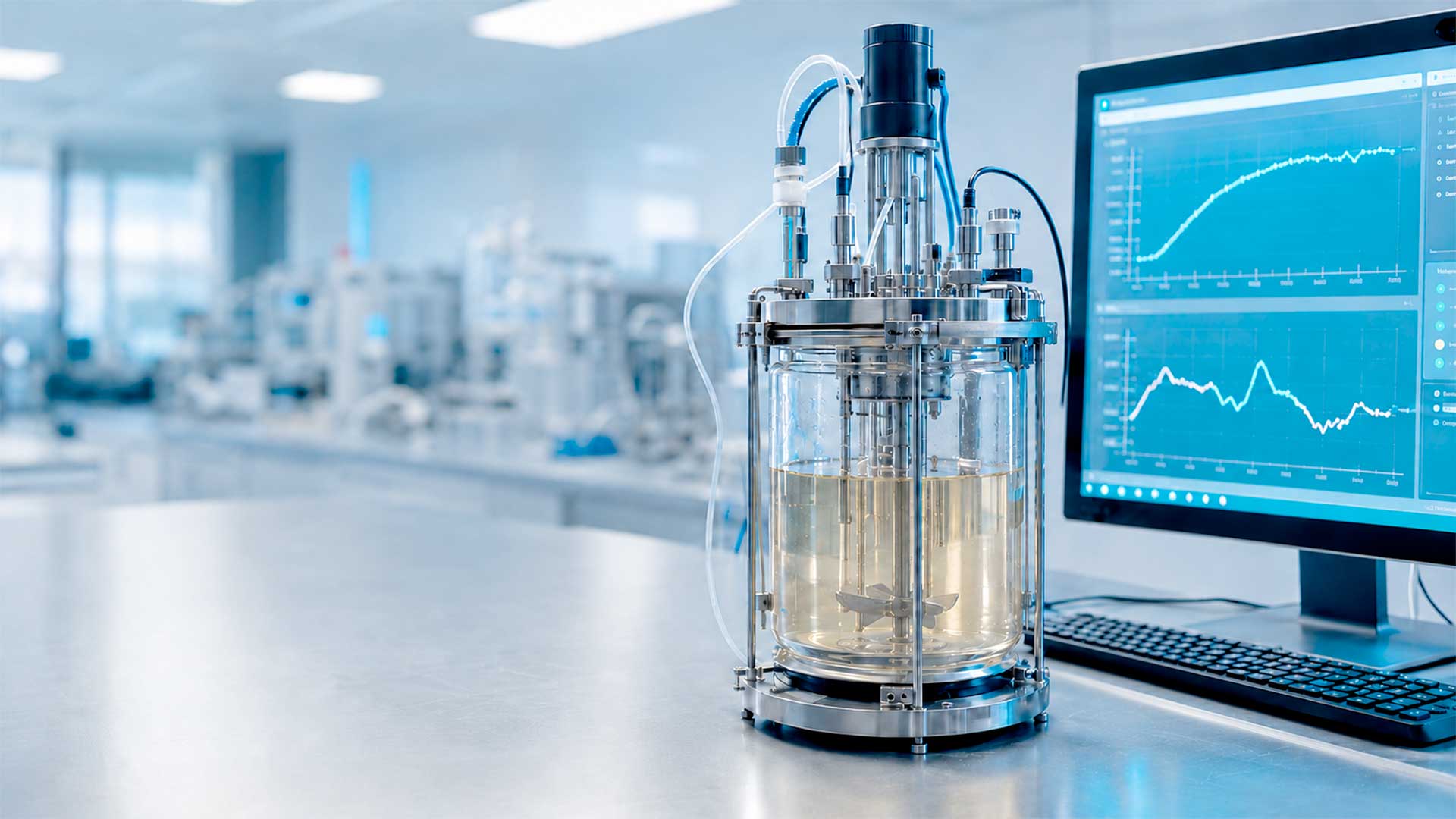
Automation room background image featuring Securecell's Numera 3, Integra 64, and Lucullus SCADA software
COMPLIMENTARY SYMPOSIUM

Scalable Bioprocessing

PAT, Digitalization, and AI-Powered Cell Analysis

Add to Calendar: iCal | Outlook | Google | Yahoo | AOL

Mark Your Calendar

Join us for a FREE IN-PERSON ONLY networking & learning event with industry pros, end users, and partners.

Registration
Free
Register Now

View our event terms & conditions

Thought Leaders

Our Speakers

Govind Rao

Professor and Director at Center for Advanced Sensor Technology, University of Maryland, Baltimore Campus

View Program  |  View Bio

Victoria Stabile

Senior Scientist, Upstream Vaccine Process Development, MERCK

View Program  |  View Bio

Nicole Foronda Quiton

Graduate Student in Biotechnology, Northeastern University, IDEXX Internship

View Program  |  View Bio

Abasha Williams

Principal Engineer, Cell Culture Sciences, MacroGenics

View Program  |  View Bio

Scalable Bioprocessing, PAT, Digitalization, and AI-Powered Cell Analysis

Why Attend This Complimentary Symposium?

Register Today
SUMMARY

Explore the future of scalable bioprocessing, PAT, digitalization, and AI-powered cell analysis. Enjoy a complimentary light breakfast and lunch buffet.

Behind The Bioprocess

Program Agenda

This complimentary in-person event in Maryland at Montgomery College – Germantown Campus brings together experts, end-users, and technology leaders to share strategies for implementing data-driven, scalable solutions in modern bioprocessing.

Following the presentations, enjoy hands-on opportunities to explore the equipment and connect with peers. Enjoy a light complimentary breakfast and BBQ lunch buffet as you network with presenters and fellow professionals.

Register Now

View our event terms & conditions
Light Breakfast & Morning Presentations

10 am – 11:45 am

Free BBQ Lunch Buffet & Networking

11:45 am – 12:45 pm

Afternoon Sessions

12:45 pm – 2:15 pm

Networking & Hands-On Tech

2:15 pm – 3:30 pm
The Program

Session Details

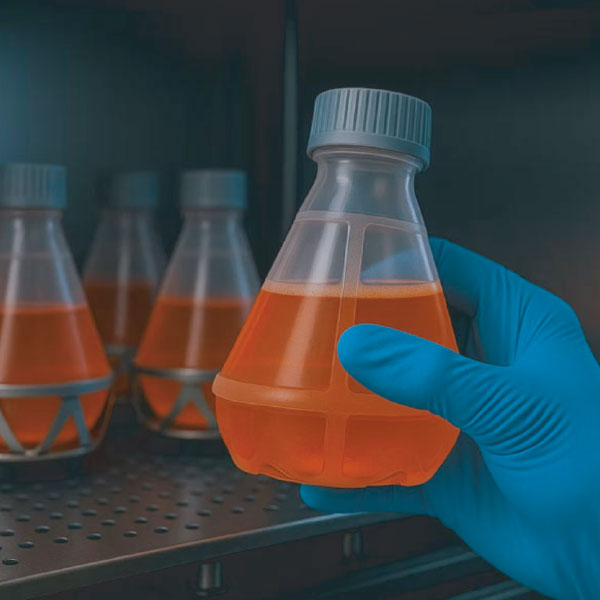
Breathable Shake Flasks for Next Gen Biomanufacturing

Shake flasks have not evolved much since their invention by Erlenmeyer in 1860. The original glass version has been largely replaced by plastic ones. Although their limitations for oxygen transfer were well known, the only improvements that have been made are the inclusion of baffles and more permeable materials for the closures.

As a result, despite being arguably the most widely used class of bioreactors due to their simplicity, they have been limited in their capability. Our disruptive innovation is to replace the entire rigid surface material with a breathable one, thereby resulting in immediate gains of 40% biomass and 115% recombinant protein yields.

In addition, the diffusible surface enables true non-invasive monitoring of oxygen and CO2, providing real-time respiration data. These advances pave the way for using simple shake flasks and their enormous installed user base to power machine learning and artificial intelligence applications and enable bioprocess development 4.0 and beyond.

Comparing Single-Use and Reusable Capacitance Probes for Measuring Cell Density in CHO Processes

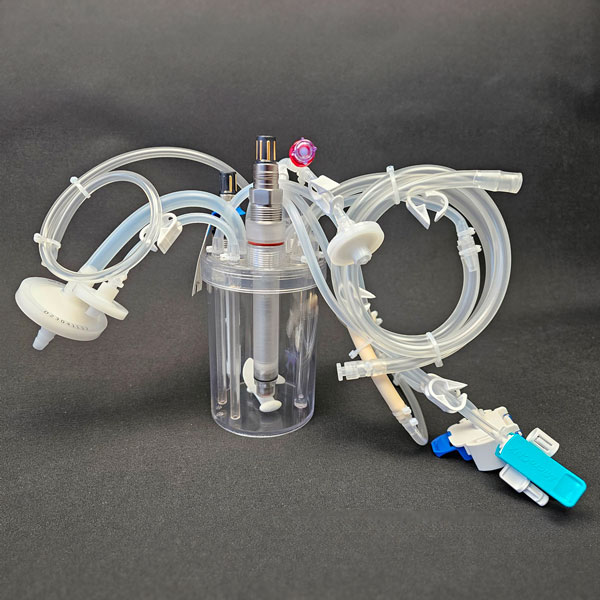
Single-use bioreactors are increasingly preferred by industry for mammalian cell culture processes. However, standard single-use bioreactor bags still require the sterilization and installation of probes. This manipulation requires additional time to autoclave and prepare the probes and adds risk during the installation step.

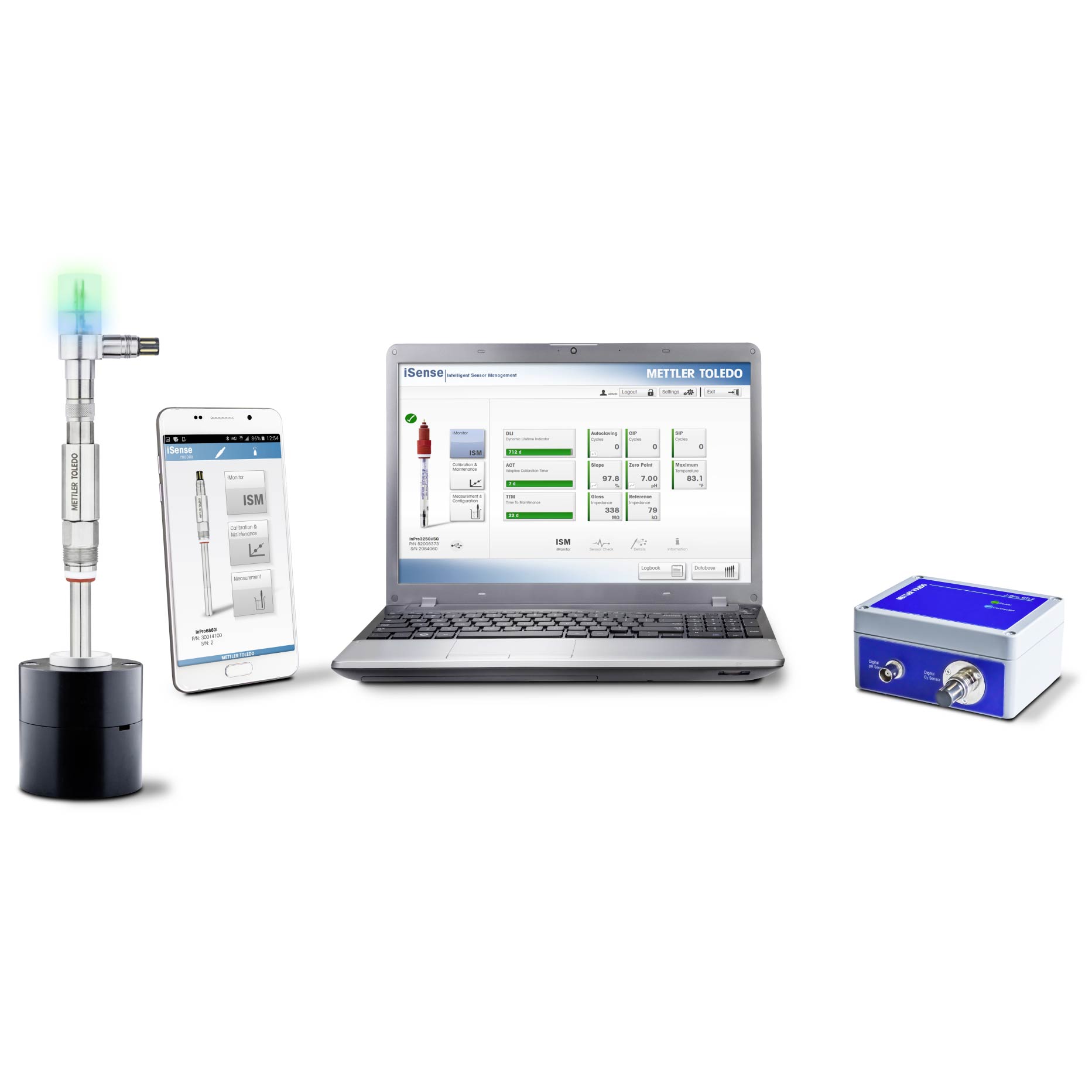
Advancements in single-use probe technology eliminate these time-consuming steps and reduce process risk, achieving the goal of a completely closed, single-use process. In addition to pH and DO probes commonly used with bioreactors, capacitance probes are providing additional valuable insights by continuously capturing data that can be related to cell health and culture performance.

This work compares the stainless-steel ABER capacitance probe to the single-use Neo probe in a 50L Thermo Scientific Single-Use bioreactor for a CHO process. Models comparing the capacitance signals at several frequencies demonstrate comparability between the two probes. Additionally, offline cell density and viability values were correlated to the capacitance to create models for cell growth and to reduce sampling burden.

Comparison of Mammalian Cell Counts Using 4BioCell Counter

This study compares the performance of the 4BioCell Count Pro with two existing cell counters used at IDEXX Laboratories to assess its accuracy and reliability. Using CHO and HEK cell lines, results showed strong overall correlation among instruments, with minor variability linked to cell type and morphology. The 4BioCell Counter produced consistent and reproducible measurements, demonstrating its potential as a dependable, automated tool for high-throughput cell counting at IDEXX.

A Digital Transformation Journey Leveraging Lucullus PIMS in Cell Culture Process Development

In the digital age, advanced software like Lucullus is crucial for improving efficiency and data integration in the biopharmaceutical industry. This talk will cover our journey with Lucullus, which has eliminated data silos and centralized data access, enhancing process analysis. We’ll discuss the challenges and benefits of implementing Lucullus features, such as automatic data capture, recipe building for automated bioreactor control, and automated metabolic rate calculations for mechanistic modeling.

Case studies from Bioprocessing Experts brought to you by

Empowering Bioprocessing

Technologies On-Site

FAQs

This complimentary symposium is brought to you by ProAnalytics and Aber Instruments.

Parking & Directions

The Scalable Bioprocessing Symposium takes place in the Bioscience Education Center (BE) on the Montgomery College Germantown Campus (20200 Observation Drive, Germantown, MD 20876).

Free parking is available for attendees in Lot 3 (student parking area, white-lined spaces) directly across from the BE building. You must print and display the free parking permit on your driver’s-side dashboard while parked — vehicles without the permit may be ticketed.

From I-270, take Exit 15 East (Route 118), continue to the second traffic light at Observation Drive, turn right onto campus, then proceed to the second stop sign. Turn right into Lot 3, then left toward the globe sculpture to park.

For additional guidance, please see the linked PDFs below:

Back to Top

Revolutionize Bioprocessing

Join Us at Montgomery College

Dec. 9, 2025 from 10am–3:30pm ET at the Montgomery College Germantown Campus

Register Now